
Have a Question? Need a Customization?
Contact us for device selection, troubleshooting & more!
Response time promise: 1 business day
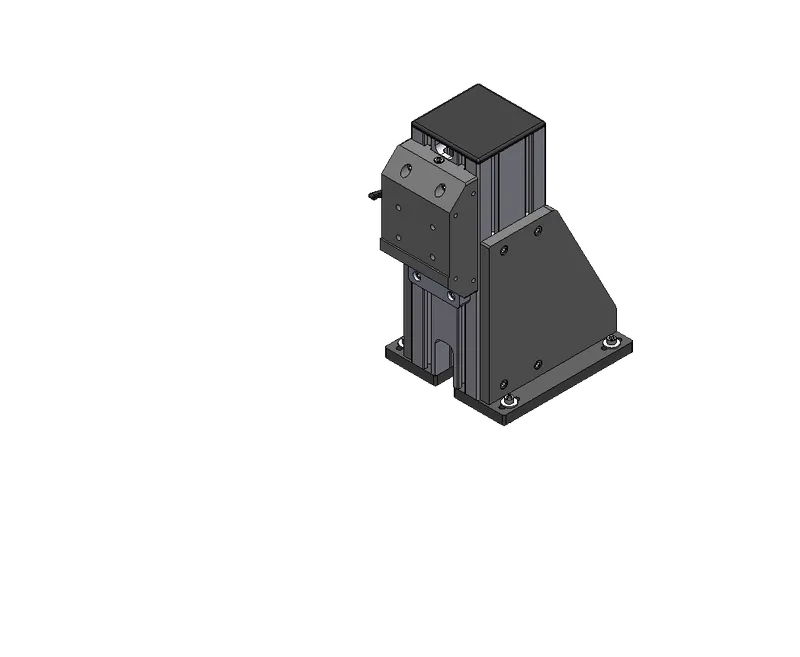
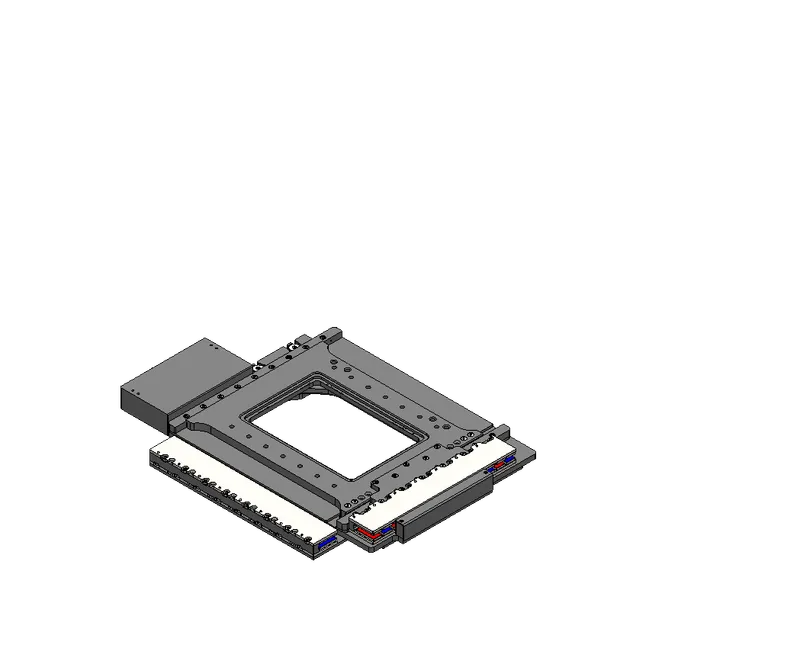
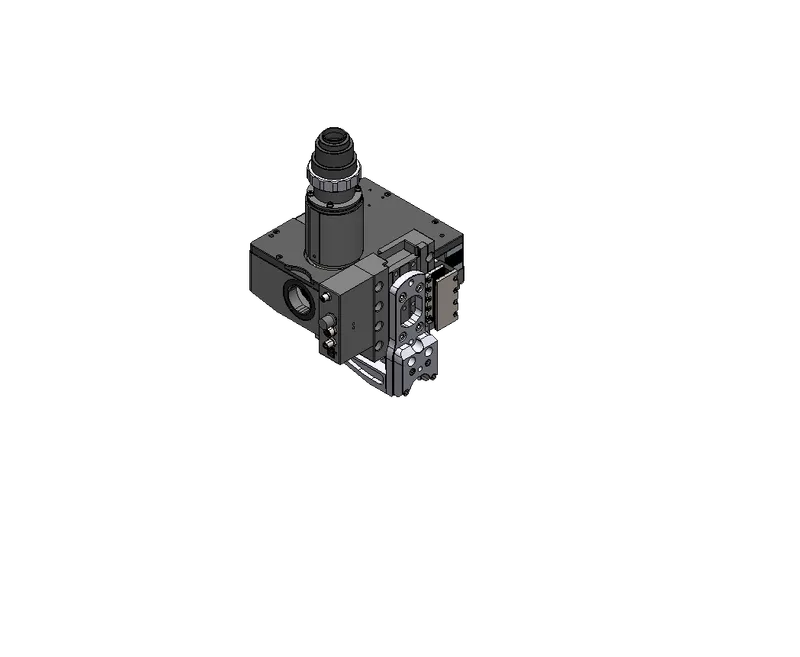

| Stage | Travel Range (mm x mm) |
Repeatability (µm) |
Capacity |
|---|---|---|---|
| X-ADR130B100B | 130 x 100 | 0.5 (precision) | 1 microplate 4 slides 1 petri dish |
| X-ADR250B100B | 250 x 100 | 0.5 (precision) | 2 microplates 8 slides |
| X-ASR100B120B | 100 x 120 | 2 (standard) | 1 microplate 4 slides 1 petri dish |
| X-ASR205B205B | 205 x 205 | 2 (standard) | 2 microplates 1 200 x 200 wafer |
| X-ASR305B305B | 305 x 305 | 2 (standard) | 6 microplates 1 300 x 300 wafer |
Stage travel is typically determined by the size of the sample being imaged. For a single microplate, slide or petri dish, 120 mm x 100 mm travel will be sufficient. For maximum walk-away time, the 305 mm x 305 mm ASR stage can hold up to six standard microplates.
For a complete explanation of specifications impacted by XY stage selection, see our article on XY stage selection.
| Stage | Microplates (qty) | Slides (qty) | Universal |
|---|---|---|---|
| X-ADR130B100B | AM109 (1) | AM242 (4) | AM108 |
| X-ADR250B100B | AM230 (2) | AM231 (8) | ❌ |
| X-ASR100B120B | AM109 (1) | AM242 (4) | AM108 |
| X-ASR205B205B | AM223 (2) | ❌ | ❌ |
| X-ASR305B305B | AM224 (6) | ❌ | ❌ |
| Epi-illuminator | Features |
|---|---|
| MLR3A-T13A | 3-channel (385, 473, 568 nm) |
| MLR3B-T13A | 3-channel (385, white, 625 nm) |
| MLG3A | 3rd party adaptor - 3 mm core liquid light guide - supports field number of 20 mm |
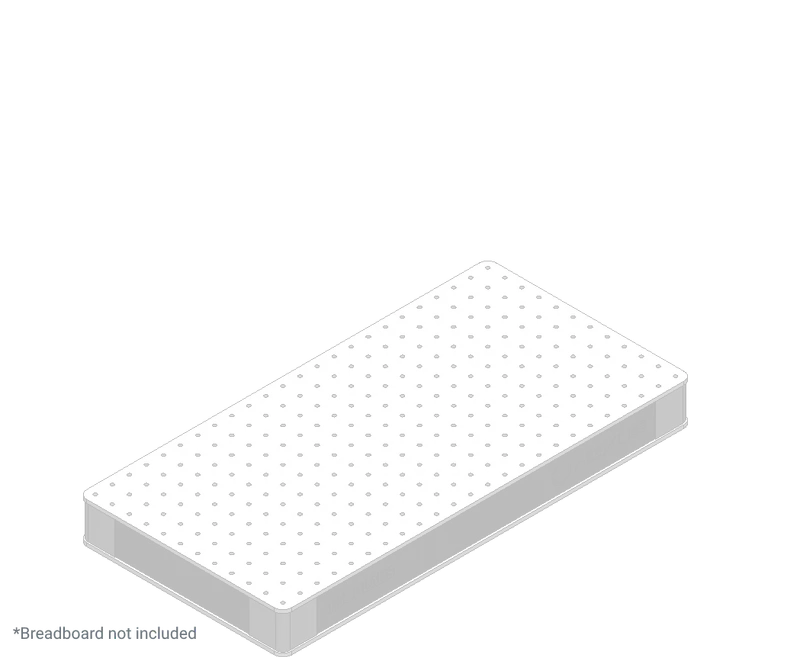
| Stage | Minimum Breadboard/Optical Table Size (mm) |
|---|---|
| X-ADR130B100B | 475 x 175 |
| X-ADR250B100B | 450 x 275 |
| X-ASR100B120B | 450 x 275 |
| X-ASR205B205B | 725 x 225 |
| X-ASR305B305B | 750 x 225 |
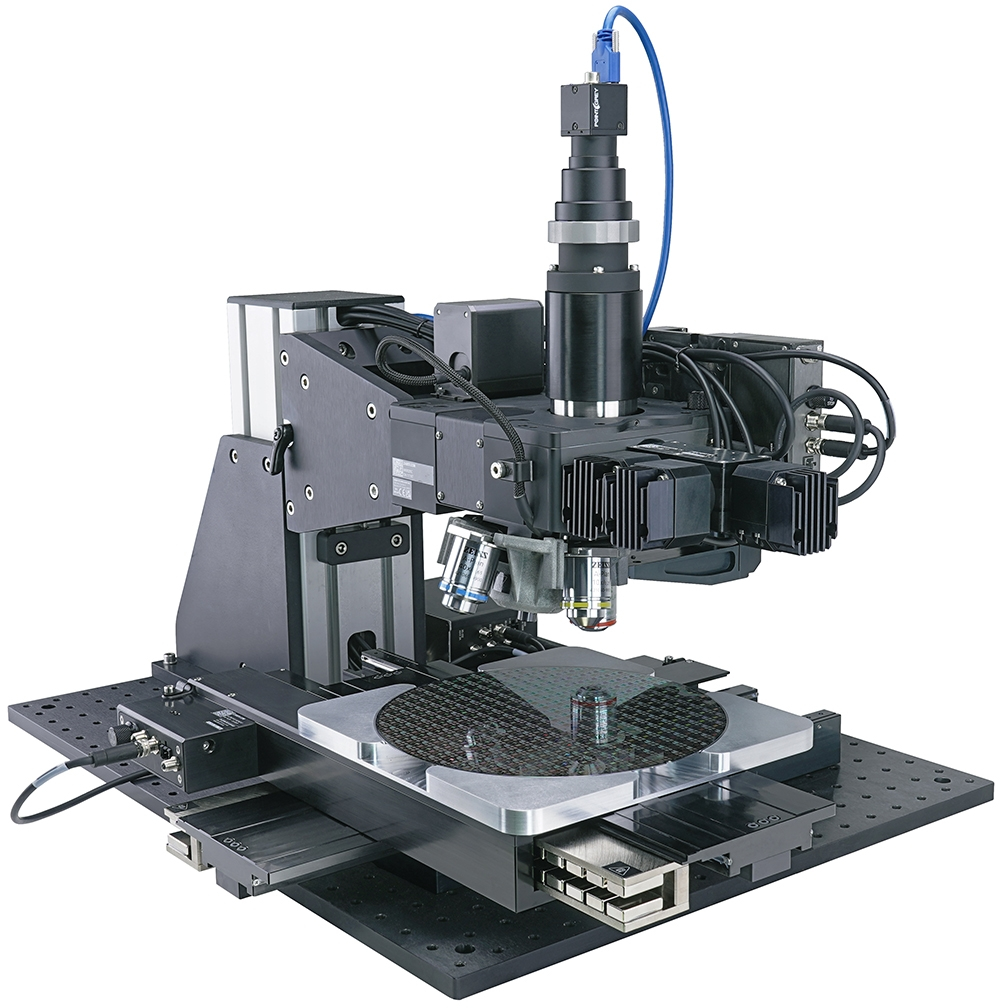
Upright Zaber Nucleus microscope with crossed X-LDM stages imaging a silicon wafer.

Contact us for device selection, troubleshooting & more!
Response time promise: 1 business day
| Manual Control | Indexed knob with push switch |
| LED Indicators |  |
| Weight | 3.5 kg (7.716 lb) |
| Compatible Optic Diameter | 25 |
| Number of Optics | 6 |
| Adjacent Optic Change Time | 350 ms |
| Communication Interface | RS-232 |
| Communication Protocol | Zaber ASCII |
| Data Cable Connection | Locking 4-pin M8 |
| Power Supply | 24-48 VDC |
| Power Plug | 2-pin screw terminal |
| Maximum Current Draw | 3300 mA |
| Operating Temperature Range | 0 to 40 °C |
| CE Compliant | |
| Vacuum Compatible |  |

Quickly set up and explore your Zaber devices.
Zaber Launcher is all you need for initial setup, testing and exploration of your Zaber devices. For some simple applications, it's all you'll ever need. It's the one piece of software that we recommend every user of Zaber products should install.
Learn MoreWrite your own code to control Zaber devices.
Ultimately, you will likely want to control your Zaber devices using your own code. We've tried to make that as easy as possible with libraries/APIs that support most popular programming languages and tools.
Whether you need modifications to standard products or have unique stage or system needs, our Product Customization Team is dedicated to building tailored solutions.
Response Time Promise: 1 Business Day
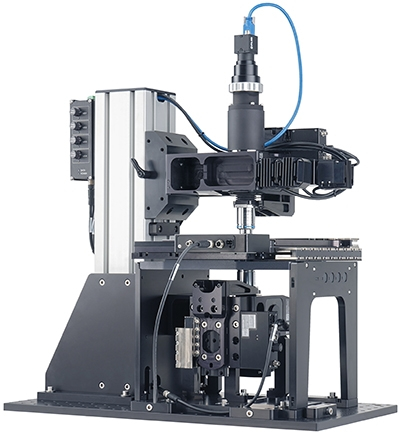
A microscope system to simultaneously image a sample from the top and bottom. Each objective has independent focus control and the upper and lower optical axes are precisely aligned to ensure concentricity. While the solution is a customer configuration, all parts are off-the-shelf products from our wide range of Nucleus microscope modules. The remarkably low cost of $44,000 speaks to the efficiency and affordability of Zaber’s modular approach. Read the case study to learn more.
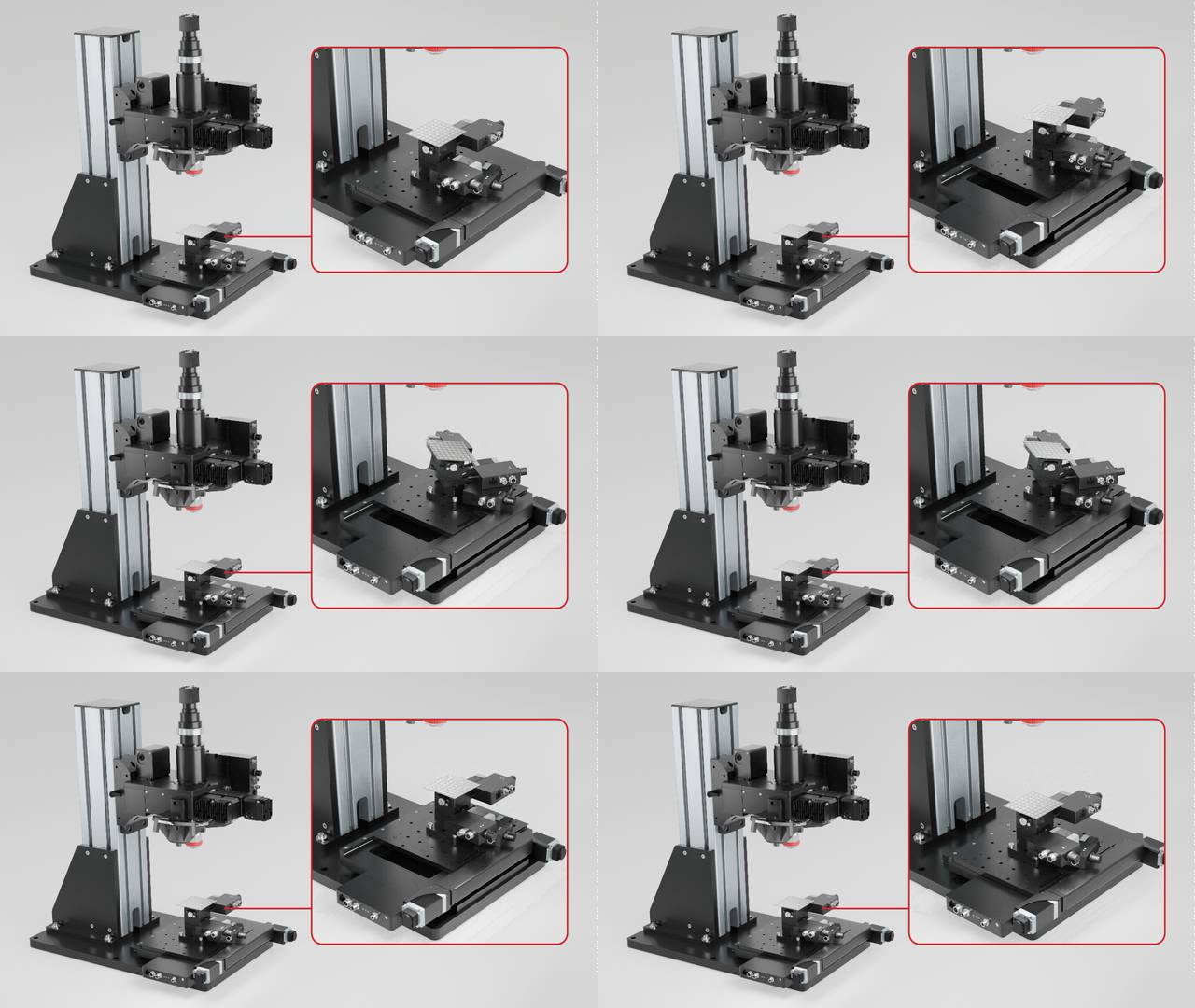
The Challenge: In applications like materials science and semiconductor inspection, larger or irregularly shaped samples can be difficult to position under a standard microscope. Fixed microscope frames don't have enough vertical clearance for larger parts and flat XY stages do not tilt or rotate the sample to expose all observable surfaces. While engineers might consider adding a hexapod stage, they are often cost-prohibitive. The Outcome: The configuration shown above delivers flexible, 6-axis sample manipulation at a fraction of the cost of a hexapod. The entire setup is fully programmable via Zaber’s open-source API or Zaber Launcher apps; in this case, a Python routine orchestrates multi-angle scan sequences to collect thousands of data points while triggering third-party cameras or lasers using built-in TTL inputs/outputs. The Engineering Approach: To provide high-travel multi-axis motion, Zaber combined the modular Nucleus® microscope platform with an integrated stack of off-the-shelf precision stages: Imaging with Adjustable Clearance: A modified MSR microscope using an extended version of the support column. The core can be repositioned to accommodate samples of varying sizes Positioning: An LDA vertical stage integrated into the microscope core provides high precision focusing. The sample platform achieves angular and rotary motion by stacking two X-GSM goniometers (for tip/tilt control) onto an X-RSM rotary stage . This set up is then stacked onto high precision XY microscope stage. Simplified Integration & Wiring: Every stage features an integrated driver and controller. The entire multi-axis system daisy-chains together, sharing power and data over a single cable to minimize clutter.