
6-Axis Microscope Positioning for Complex Sample Geometries
Published on May 20, 2026
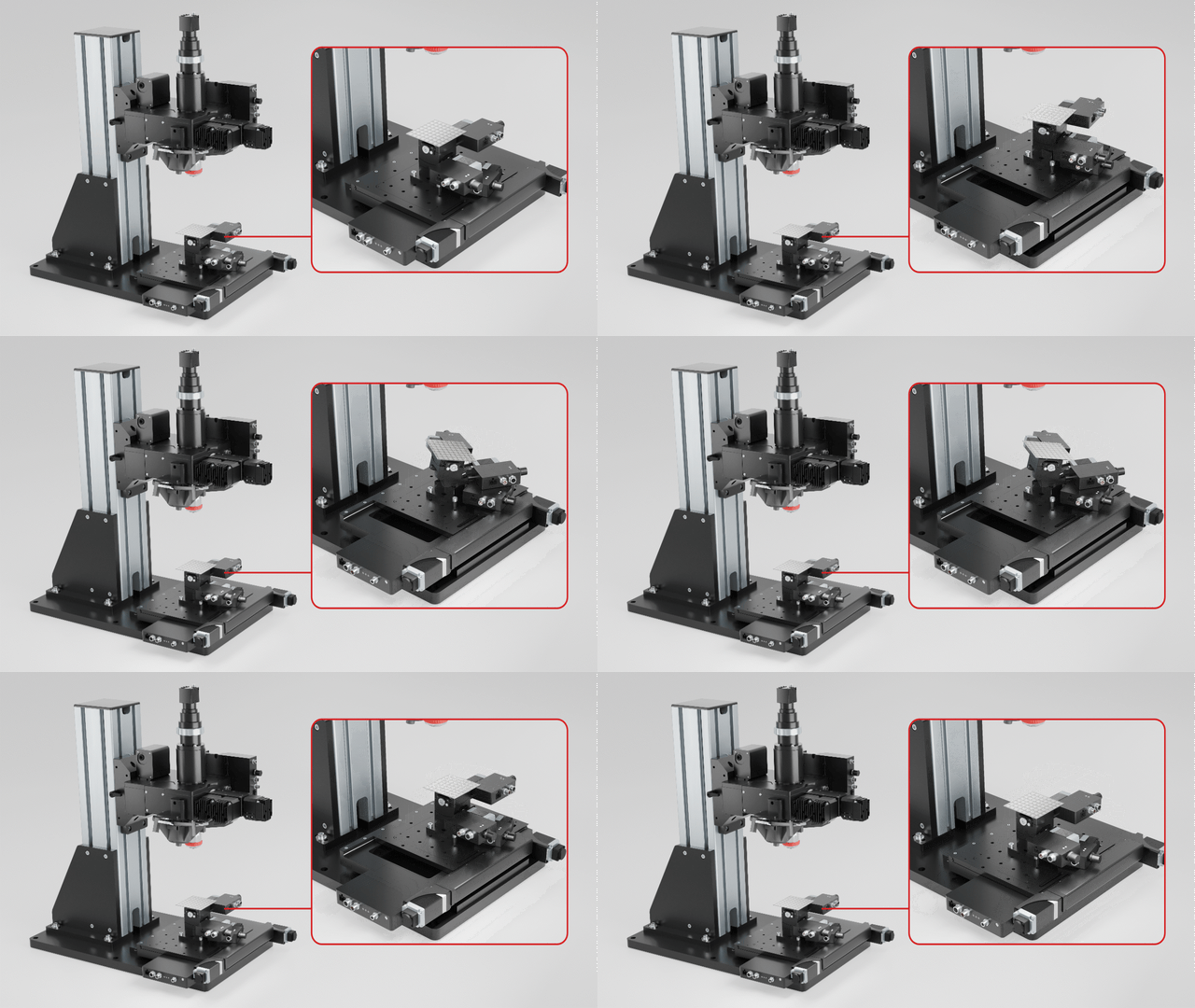
The Challenge:
In applications like materials science and semiconductor inspection, larger or irregularly shaped samples can be difficult to position under a standard microscope. Fixed microscope frames don't have enough vertical clearance for larger parts and flat XY stages do not tilt or rotate the sample to expose all observable surfaces. While engineers might consider adding a hexapod stage, they are often cost-prohibitive.
The Outcome:
The configuration shown above delivers flexible, 6-axis sample manipulation at a fraction of the cost of a hexapod. The entire setup is fully programmable via Zaber’s open-source API or Zaber Launcher apps; in this case, a Python routine orchestrates multi-angle scan sequences to collect thousands of data points while triggering third-party cameras or lasers using built-in TTL inputs/outputs.
The Engineering Approach:
To provide high-travel multi-axis motion, Zaber combined the modular Nucleus® microscope platform with an integrated stack of off-the-shelf precision stages:
- Imaging with Adjustable Clearance: A modified MSR microscope using an extended version of the support column. The core can be repositioned to accommodate samples of varying sizes
- Positioning: An LDA vertical stage integrated into the microscope core provides high precision focusing. The sample platform achieves angular and rotary motion by stacking two X-GSM goniometers (for tip/tilt control) onto an X-RSM rotary stage . This set up is then stacked onto high precision XY microscope stage.
- Simplified Integration & Wiring: Every stage features an integrated driver and controller. The entire multi-axis system daisy-chains together, sharing power and data over a single cable to minimize clutter.
Our product customization team is happy to discuss customizations to meet your application. Contact us with your requests.