Products

Lead Time
Under 1 Week

User-Friendly
Software & API

30-Day
Risk-Free Trial

Flexible Modular
Configuration

New Releases

Custom Products & Services

Whether you need 1) modifications to an existing product, 2) a bespoke OEM solution, or 3) help integrating a motion system, our team works with you to meet your specific space, budget, and performance needs. In addition to our standard products, Zaber offers a wide variety of customization services. As with all Zaber products, you can rely on swift response times, fast lead times, and dependable supply chain.

Response Time Promise: 1 Business Day

Motorized Rotation of Polarizing Filters Enable Automated Acquisition of Large Datasets

Motorized Rotation of Polarizing Filters Enable Automated Acquisition of Large Datasets

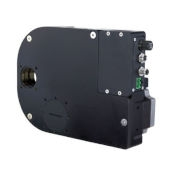
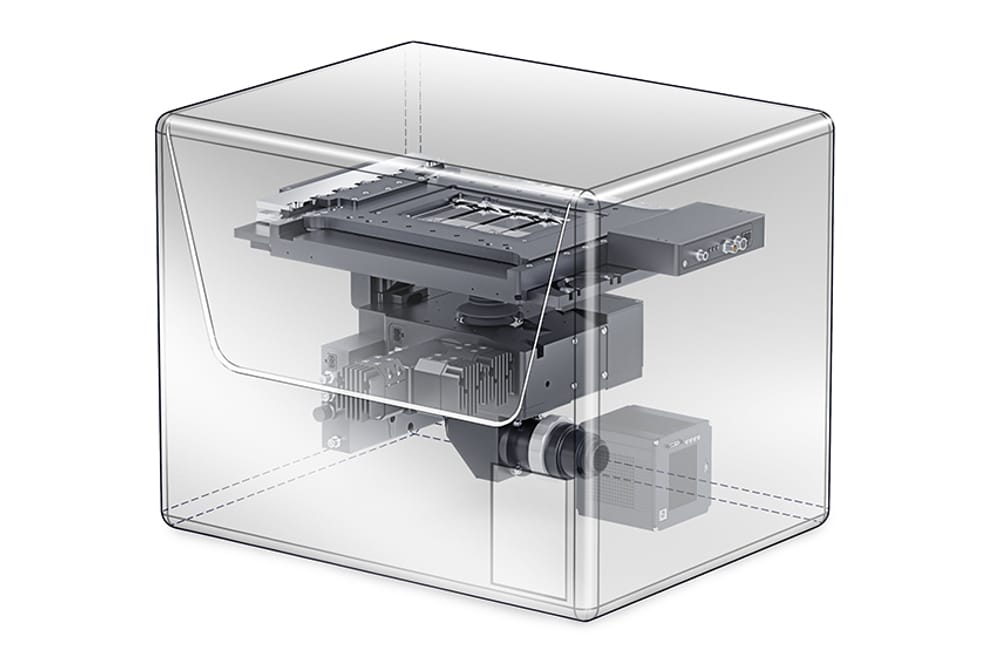
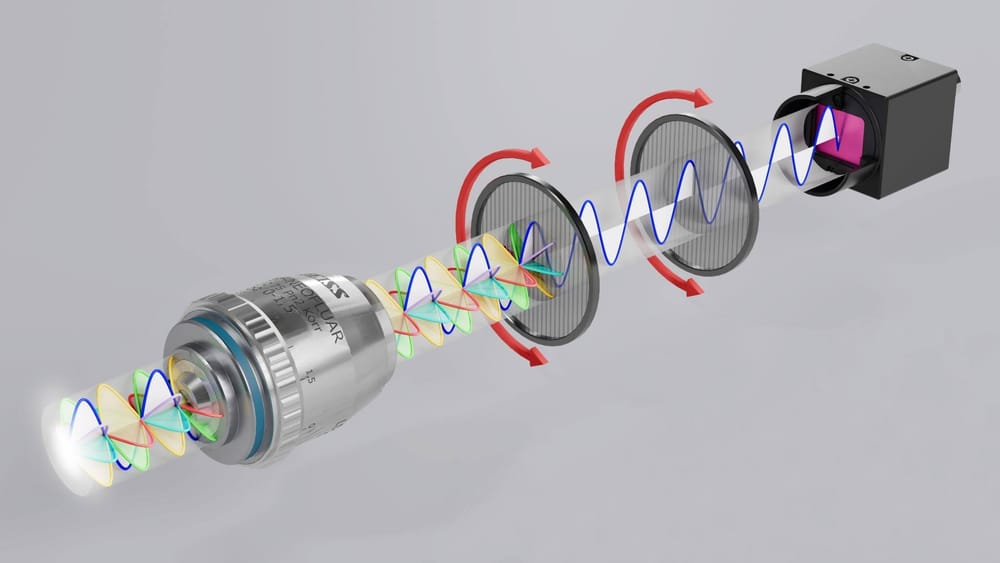
The Challenge: Sensing the degree and angle of linearly polarized light across a sample provides material scientists with a fast, non-contact means of material characterization. Detecting grain boundaries in metals, identifying microplastics in biological materials, and visualizing internal stresses in materials are all enabled by sensing polarized light. While manually rotated filter mounts are commercially available, they are not suitable for capturing high resolution polarimetry data across a large sample area. Capturing a large high-quality dataset with fine angular resolution of polarization requires automation. The Solution: By mounting a pair of Zaber motorized rotary stages into the optical path of a Zaber Nucleus automated microscope, we delivered a fully motorized, high resolution polarimetry system (Fig. 1). Sample positioning, polarising filter rotation and image acquisition can be controlled though our free Zaber launcher application. Advanced automation is achieved using the Zaber Motion Library API, which is available for Python, C++, C#, Labview, MATLAB and more. Figure 1. A Zaber Nucleus inverted microscope with motorized polarizing filters mounted between the objective and the tube lens and between the tube lens and the camera mount. The rotation of the polarizing filters can be independently controlled. The Engineering Approach: The low profile and open aperture of Zaber’s X-RSW60A rotary stages enabled them to be inserted into the optical path without altering any of the key optical distances for the infinity space or between the tube lens and the image sensor plane. Special care was taken to minimize internal reflections in the optical path when integrating these rotary stages. Optical alignment is critical to imaging performance so custom features were included in the design to enable fine tuning the positioning of each rotary axis during final assembly of the microscope system. Zaber RSW60 rotary stages support standard 25 mm filters. Their position in the optical path ensures the 22 mm maximum field number of the Nucleus microscope is preserved. A large field of view coupled with high speed stages and polarizing filter rotation maximizes data acquisition speed. The fine angular resolution of the X-RSW60A stage supports high resolution polarimetry measurements using high extinction ratio filters. Additional hardware like cameras can be controlled with the Zaber Motion Library API via TTL triggering, minimizing the time, and number of dependencies required to write custom automated polarimetry scanning scripts.

Dual camera customization for automated microscopy

Affordable Dual-Camera Integration for Automated Microscopy

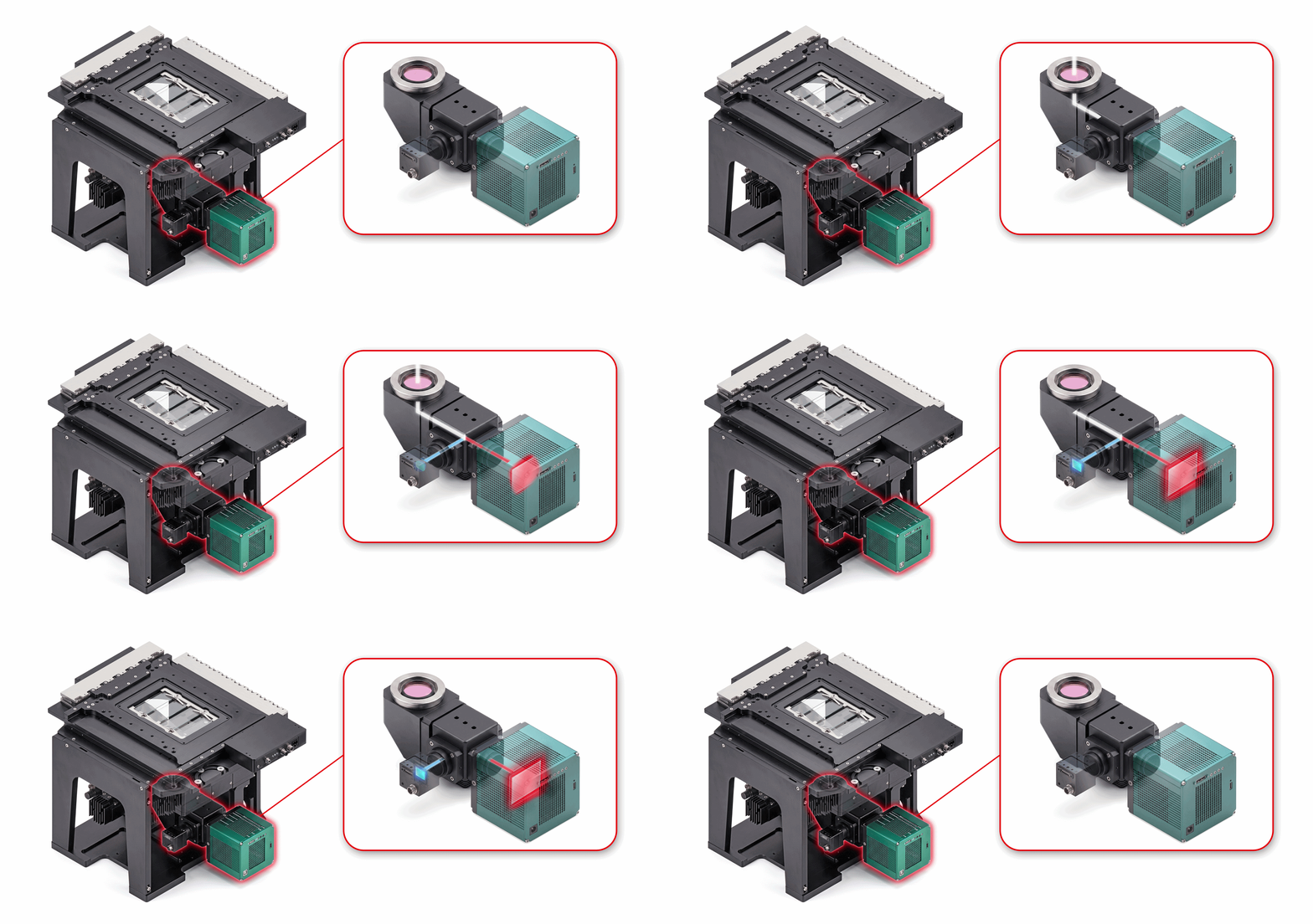
The Challenge: Whether in live cell imaging, semiconductor wafer inspection, or other types of microscopy, microscope users often need to acquire data from two detectors as quickly as possible. Zaber has supported many customers requiring dual camera microscope systems. The three most common reasons are: Higher-Speed: Eliminating mechanical filter switching maximizes imaging throughput. For example, simultaneous imaging of two different fluorophores is essential for investigating rapid processes in live cells. Hyperspectral Imaging: Imaging across an expanded spectral range often requires multiple detectors. The performance of cameras optimized for the visible spectrum falls off beyond 750 nm (Fig. 1). Conversely, cameras which excel well at long wavelengths, do not perform as well in the visible spectrum. A two camera system delivers the best of both worlds. Multi-Mode: Multiple detectors on a single microscope frame can greatly increase a system’s versatility without the need to purchase an entire second microscope. A single system can combine a colour camera for slide scanning with a monochrome camera for fluorescence, or pair a standard camera with more exotic detectors (like SPAD arrays or spectrometers) to easily locate regions of interest. Figure 1. Quantum Efficiency curves of one camera optimized for maximum sensitivity in the visible spectrum (blue curve), and one which trades reduced peak QE for sensitivity over a much larger range of wavelengths (red curve). The Solution: To support two detectors on a single microscope, Zaber created a variant of our MTC tube lens and camera mount module which houses a beam splitter to create two optical paths (Fig. 2). Full compatibility with our Nucleus microscope platform ensures seamless integration into existing automated microscopy workflows. Customers can use a range of different beam splitters including: A 50/50 filter to evenly split the emission wavelengths to both cameras (Fig. 2 A). High or Low pass filters to send specific ranges of wavelengths between the two cameras (Fig. 2 B). A 0/100 filter to transmit or reflect all wavelengths to one or the other camera (Fig. 2 C, D). Figure 2. The optical path can be configured with a beam splitter (A) to send all wavelengths to both paths, or a dichroic mirror (B) to send specific wavelengths to different paths. By inserting or removing a 0/100 mirror (C, D), all light can be directed to one path or the other. Zaber’s dual camera mount supports a range of different cameras and detectors. Options are available for C-mount, F-mount, M42, TFL, SM1, SM2 and Thorlabs cage mount. When pixel-level alignment between the two camera image sensors is required, fine manual adjustment of XY and ፀ is available. The Engineering Approach: Zaber’s dual camera mount is a drop-in replacement for MTC90 and MTC00 tube lens and camera mount assemblies. This allows existing Nucleus microscope systems to be upgraded. The dual camera mount module uses a DFM1/M Thorlabs 30mm cage cube to house a standard 25 mm x 36 mm beam splitter or dichroic. The optic can be manually moved in and out of the optical path.

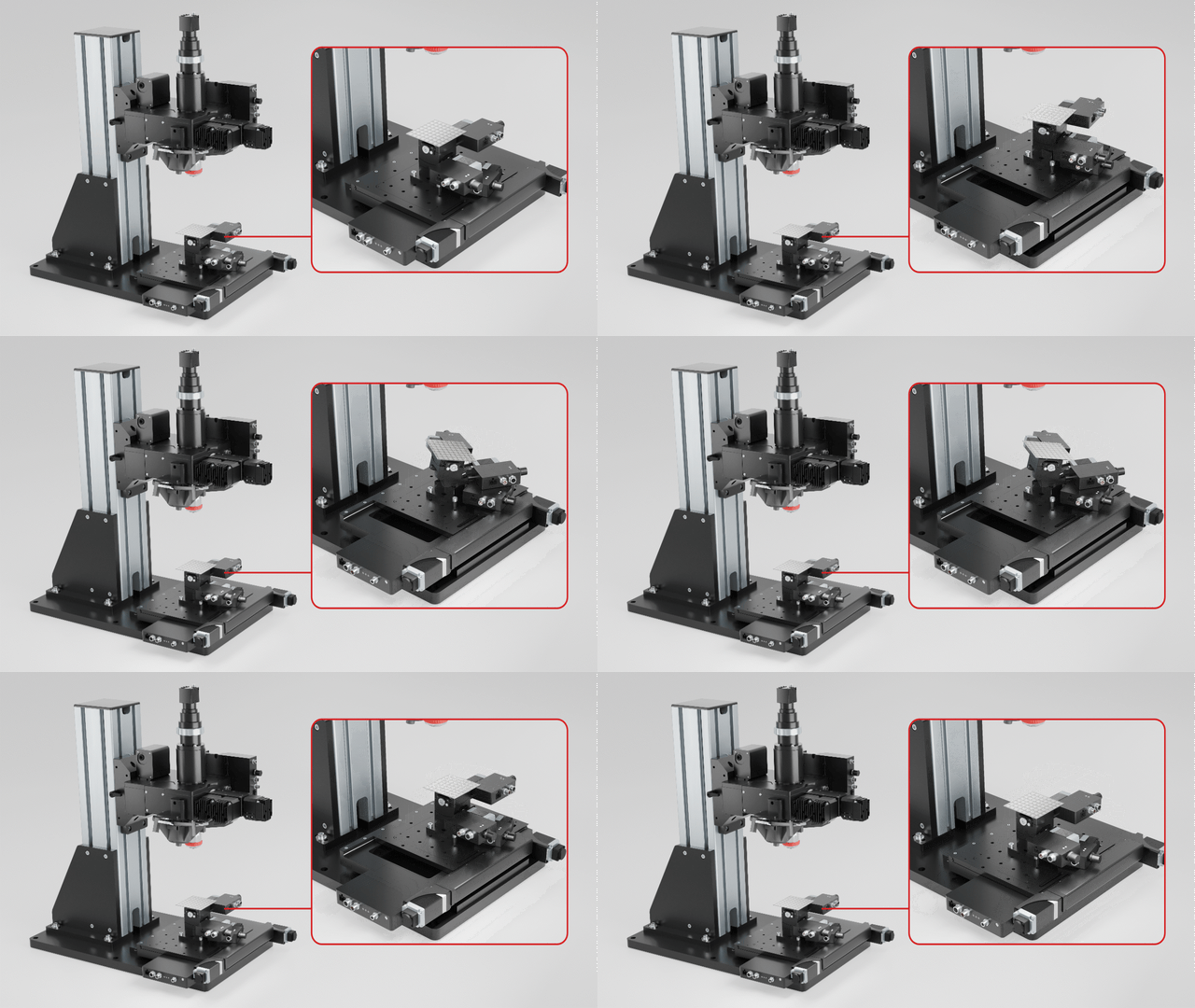
Upright microscope with platform to move sample in 6 DOF

6-Axis Microscope Positioning for Complex Sample Geometries

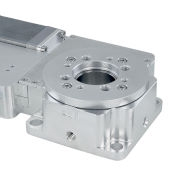
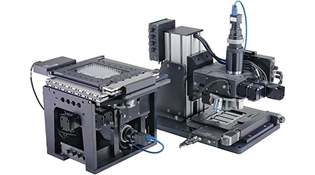
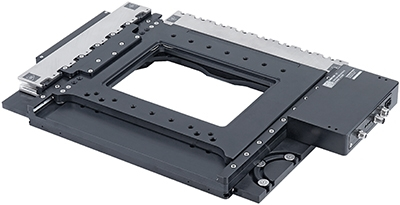

The Challenge: In applications like materials science and semiconductor inspection, larger or irregularly shaped samples can be difficult to position under a standard microscope. Fixed microscope frames don't have enough vertical clearance for larger parts and flat XY stages do not tilt or rotate the sample to expose all observable surfaces. While engineers might consider adding a hexapod stage, they are often cost-prohibitive. The Outcome: The configuration shown above delivers flexible, 6-axis sample manipulation at a fraction of the cost of a hexapod. The entire setup is fully programmable via Zaber’s open-source API or Zaber Launcher apps; in this case, a Python routine orchestrates multi-angle scan sequences to collect thousands of data points while triggering third-party cameras or lasers using built-in TTL inputs/outputs. The Engineering Approach: To provide high-travel multi-axis motion, Zaber combined the modular Nucleus® microscope platform with an integrated stack of off-the-shelf precision stages: Imaging with Adjustable Clearance: A modified MSR microscope using an extended version of the support column. The core can be repositioned to accommodate samples of varying sizes Positioning: An LDA vertical stage integrated into the microscope core provides high precision focusing. The sample platform achieves angular and rotary motion by stacking two X-GSM goniometers (for tip/tilt control) onto an X-RSM rotary stage . This set up is then stacked onto high precision XY microscope stage. Simplified Integration & Wiring: Every stage features an integrated driver and controller. The entire multi-axis system daisy-chains together, sharing power and data over a single cable to minimize clutter.

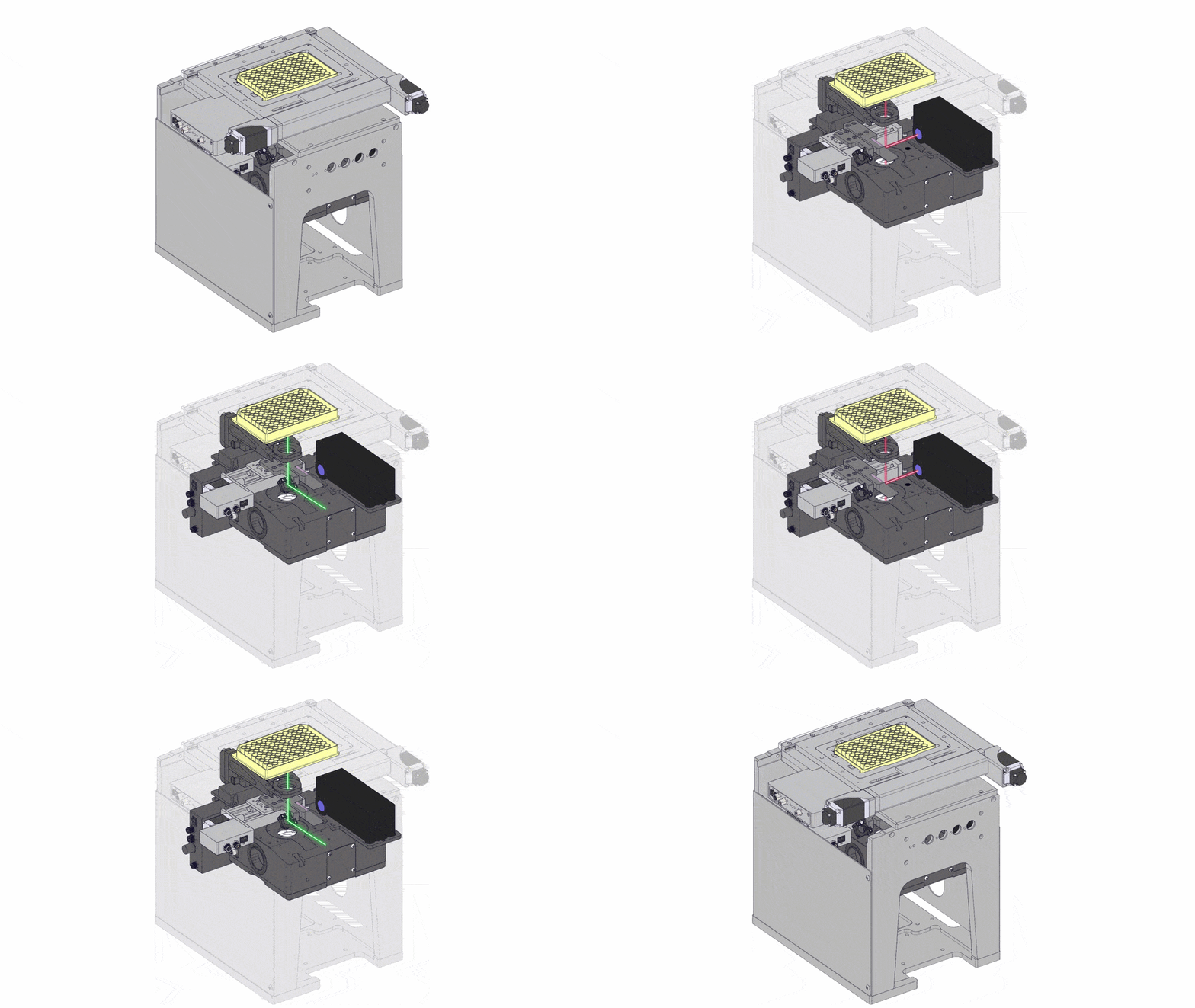
optical-path-switching

Precision Optical Path Switching for Multimodal Raman-Fluorescence Microscopy

The Challenge: A customer needed to perform single-cell metabolomics by identifying specific bacterial cells via widefield fluorescence imaging and subsequently analyzing those same cells using Raman spectroscopy. Because typical bacterial cells are only 1–10 μm in size, any mechanical deviation during the switch between fluorescence imaging and Raman spectroscopy would cause the Raman laser to miss the target identified in the fluorescence view. This customization allows the researcher to identify a target cell in fluorescence mode and trigger a Raman acquisition with a single software command. The automated switch occurs in under 350 ms, with the high precision of the kinematic mount ensuring the cell remains perfectly centered. This eliminates the need for manual recalibration between modes, allowing for much higher throughput. The Solution: Zaber’s Custom Engineering Team modified a Nucleus™ MKR microscope core by integrating an additional optical path to couple the Raman laser. We mounted a kinematic mirror mount and a notch dichroic onto a single motorized linear axis to switch the optical path between the Raman laser and detector, and the fluorescence illuminator and camera. The Engineering Approach: The system uses a Zaber X-LSM Linear Stage. as the switching mechanism within the Nucleus™ modular platform. Precision & Speed: The X-LSM's low pitch, roll, and yaw specifications were key to ensuring the mirror which couples the Raman laser always returns to the same angular orientation every time. This in turn ensures the consistent centering of the laser spot. The higher speed of a coarse-pitch lead screw LSM delivered a rapid < 350 ms switching time. Integrated Control The X-LSM’s integrated controller joined the same power and data daisy-chain as the other microscope modules. This simplified the setup and control of the hardware. Broad Compatibility: The modular design maintains compatibility with industry-standard objectives from Mitutoyo, Zeiss, Nikon, and Evident.

Modifications & Accessories

For mechanical or electrical modifications to standard models, alterations can be made and shipped within a matter of weeks.

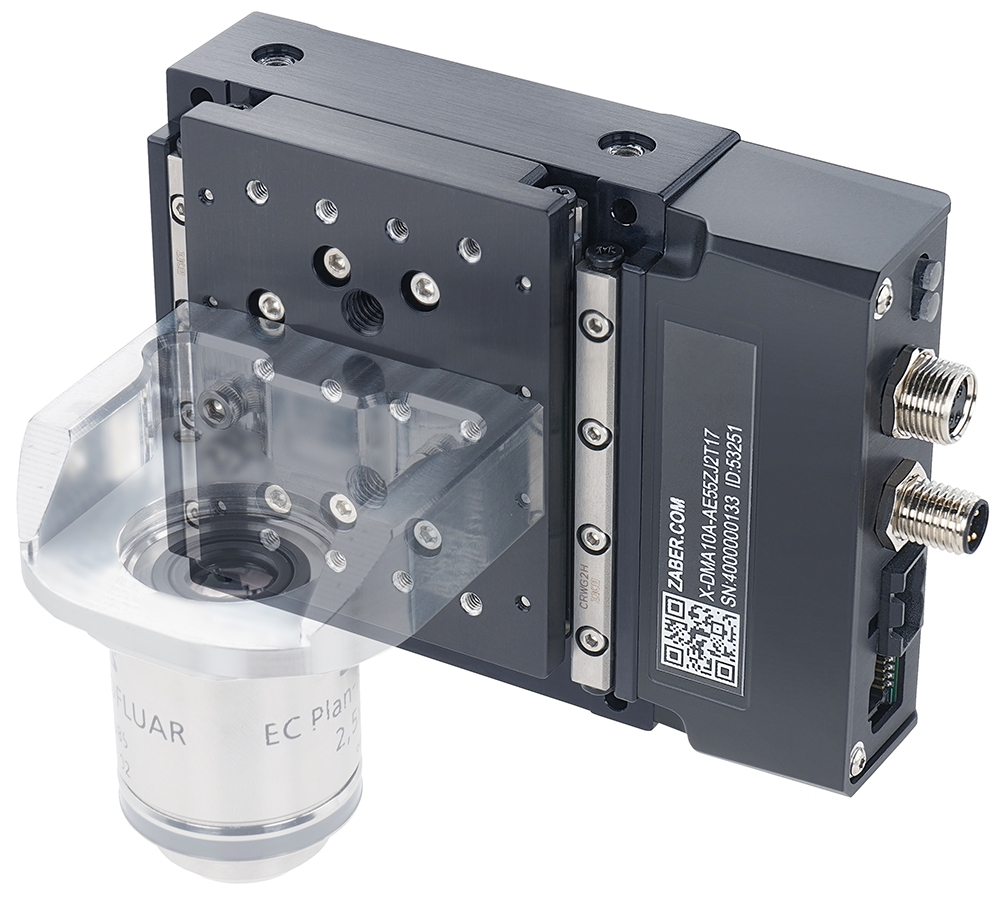
Examples include custom travel lengths, added mounting features, additional carriages, customized brackets, and limit sensor changes.

OEM Customizations

For OEMs with precise requirements for performance, space, budget, and delivery schedules, our Product Customization team is dedicated to crafting tailored solutions.

We work with you to understand and address your unique needs while also establishing a dependable supply chain to meet your demand.

System Design & Build Services

Whenever there's a need to outsource segments or the entire positioning system, we can help.

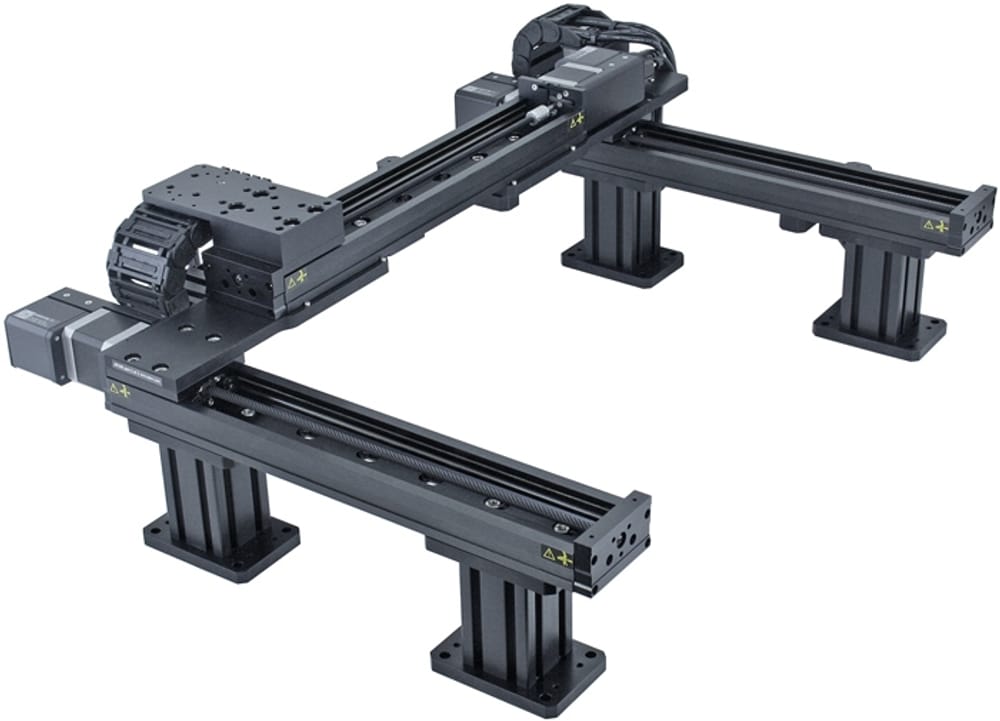
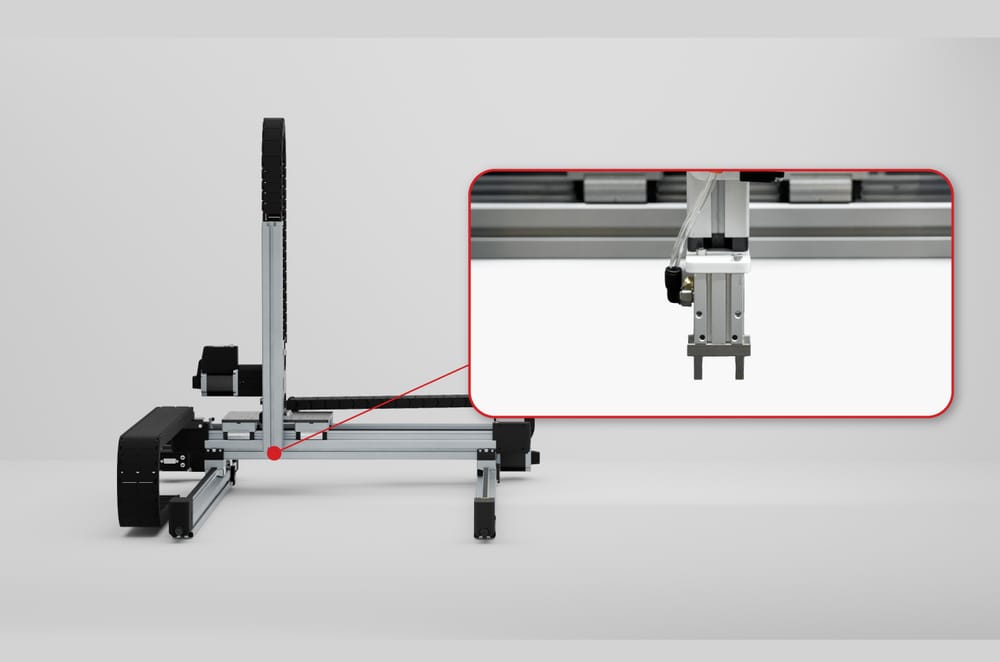
We work with you to understand and address your unique system needs and develop a solution using a mix of Zaber models, customized hardware, and third-party components as appropriate.